
Platform Science
★★★★★ 4.0 · 11 Reviews
What is Platform Science?
Platform Science is an innovative enterprise grade IoT fleet management platform for the transportation and logistics industry. By bringing expertise from 30+ years in telematics together with innovative thinking of IoT-technology experts, Platform Science is the first open platform solution for enterprise fleets to better configure their fleet management solution and meet changing demands of the regulatory landscape, all while preparing for a future of IoT-connected trucks/freight and the digital supply chain. The first of its kind truly extensible platform, it gives companies the flexibility to integrate new innovative applications from the ecosystem and enables them to provide enhanced value to customers – beyond transportation. With modern software technologies, and real-time edge computing robust security best practices and valuable innovations from the ecosystem, the platform empowers enterprise fleets to unlock massive untapped efficiencies trapped in the $1.5T U.S. logistics industry, and deliver enhanced value to customers – beyond transportation.
Alternatives to Platform Science
 KonexialKonexial creates superb technology to Drive LIFE through innovative ELD solutions for truck drivers. Our FMCSA-approved My20… Learn more about Konexial.
 Axon SoftwareFounded in 1982, Axon Development Corporation was one of the first providers of software designed specifically for the… Learn more about Axon Software.
 The DOT DirectoryThe DOT Directory has been created to bring the trucking industry into the Information Age. The first step is to get access to… Learn more about The DOT Directory.
 DyselDysel is a worldwide supplier of Equipment Life Cycle (ELC), a powerful equipment management system for companies that purchase… Learn more about Dysel.
 ExspeediteExspeedite is the primary mobile trucking software provider serving commercial and private fleets, brokerage, 3PL, and… Learn more about Exspeedite.
 Fluid TruckFluid Truck is a technology-based truck rental platform enabling small & mid-sized businesses, as well as consumers, to rent… Learn more about Fluid Truck.
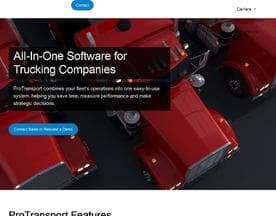 ProTransportProTransport is an advanced, comprehensive software solution for trucking companies of all sizes. ProTransport combines your… Learn more about ProTransport.
 Rand McNallyRand McNally is transforming personal and business travel with its revolutionary connected vehicle technology. Leveraging its… Learn more about Rand McNally.
 Simple AceSimple Ace is a US-Customs Border Protection (CBP) and Canadian Border Services Agency (CBSA) accredited and certified… Learn more about Simple Ace.
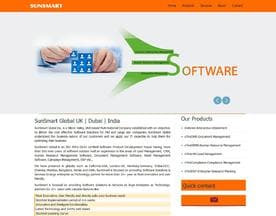 SunSmart GlobalSunSmart Global Inc. is a Silicon Valley, USA based Multi-National Company established with an objective to deliver the cost… Learn more about SunSmart Global.
Platform Science Reviews (11)
- ★★★★★6
- ★★★★★2
- ★★★★★1
- ★★★★★1
- ★★★★★1
Review Summary
Generated using AI from real user reviews
Platform Science works well for small fleet operators and agencies managing multiple clients, but billing opacity and steep configuration curves frustrate some users.
Users consistently praise the mobile experience, with multiple reviewers highlighting how the platform handles real-time visibility, ELD compliance, and alerts on phones and tablets—particularly valuable for solo operators and remote decision-making. The open platform architecture and ecosystem integrations also earn repeated mention, as does edge computing that processes vehicle data locally for faster alerts. The permissions system and role-based access receive strong marks for granularity, especially when managing separate client accounts.
Criticism clusters around onboarding friction and billing. Several users note that configuration documentation leans toward enterprise IT teams rather than small operations, leaving solo operators with a steep learning curve. One reviewer flags inaccurate GPS routing for trucks. Billing generates the sharpest complaint: per-device pricing arrives with undisclosed add-on fees that complicate client reconciliation for agencies. Support response times are described as inconsistent—solid and responsive in some cases, slow for edge-case issues in others.
One review is dismissive across the board (GPS issues, system reliability), while most others acknowledge trade-offs: powerful tools that reward the time investment, with weaker onboarding scaffolding and support SLAs for non-standard problems.
★★★★★
Wednesday, January 21, 2026

“Running a one-truck operation means my phone is essentially my…”
Running a one-truck operation means my phone is essentially my office, and Platform Science gets that completely. The mobile experience is genuinely good, not an afterthought. I pull up compliance info, check HOS status, and manage my ELD data from rest stops and truck stops without fumbling through clunky menus. About a year in and I have zero complaints about the remote functionality.
Solo operators get overlooked by enterprise tools all the time. This one actually scales down. The interface is clean enough that I never needed to call support, though the two times I did reach out they were responsive and helpful. Worth every dollar.
★★★★★
Monday, January 5, 2026
“Billing has been my biggest headache across the year I've…”
Billing has been my biggest headache across the year I've managed this platform for several clients. The per-device pricing sounds reasonable at the pitch stage, then the invoices arrive with add-on fees for features I assumed were included. For an agency context, reconciling that against individual client budgets every month is genuinely painful. No transparency in the pricing portal either.
To be fair, the open platform architecture is real and the IoT integrations do work well once configured. The tech has promise. But when the value story falls apart at the invoice, it's hard to keep selling this to clients with tighter margins.
★★★★★
Sunday, January 4, 2026
“Five years into running a single-truck operation through Platform Science,…”
Five years into running a single-truck operation through Platform Science, and the edge cases are honestly where this platform has impressed me most. Solo operators like me push tools into corners that enterprise teams never touch. Odd Hours of Service patterns when you're crossing state lines on short-notice loads, custom ELD configurations when your hardware doesn't match the standard setup guides, workflows that the documentation sort of waves at but doesn't fully explain. Every time I hit one of those walls, I eventually found a path through. Not always quickly, and not always without a support ticket or two, but the platform's flexibility meant I was rarely stuck in a true dead end.
The frustrations are real, to be fair. Onboarding documentation leans heavily toward fleet managers with IT support behind them. As someone doing everything solo, the learning curve for configuring the open platform features was steep enough that I shelved a few integrations for months before circling back. Their support team is solid when you reach them, though response times can stretch if your issue isn't a clear-cut fix. The value-for-money picture looks different at my scale than it probably does for a 200-truck fleet, and I won't pretend otherwise.
That said, the edge computing capabilities have genuinely changed what I can do from the cab. Real-time data that doesn't fall apart in low-connectivity corridors through the Rockies or rural Texas, that's not a small thing for a driver who also handles dispatch. The open ecosystem means I could bolt on a load-planning app without ripping out what was already working. For a solo operator willing to put in the time, this platform punches well above what you'd expect. I'd point any independent carrier toward it.
★★★★★
Thursday, December 18, 2025
“Configuration depth is what keeps me loyal to this platform…”
Configuration depth is what keeps me loyal to this platform after five-plus years of managing it on behalf of carrier clients. The permissions architecture is genuinely thoughtful. I can carve out exactly what each client's dispatcher, safety manager, or driver-facing role should see, with no bleed-over between accounts. That matters a lot when you're running an agency model and juggling eight or nine separate fleet environments from one backend. Onboarding a new client used to take days with other tools. Here, I can clone a permission template, adjust the app assignments, and hand off a clean environment in an afternoon.
The admin console keeps getting better, too. Recent updates made the role-assignment workflow much less clicky, and the audit logging is detailed enough that I can actually trace a config change back to who made it and when. Customer support has been solid whenever I've hit edge cases, though response times vary depending on who picks up the ticket. Small gripe on an otherwise excellent platform.
★★★★★
Tuesday, December 16, 2025
“Mobile access was the thing that made or broke this…”
Mobile access was the thing that made or broke this decision for me. Our fleet is spread across multiple routes and I'm rarely at a desk for more than an hour at a stretch. What Platform Science nailed, and what I didn't fully appreciate until I was standing in a truck yard at 6 a.m. troubleshooting a driver issue, is how well the platform holds up on a phone. Real-time vehicle data, driver status, ELD compliance flags, all of it loads fast and stays readable even on a spotty connection. That matters more than any feature list.
Two years in, and the remote workflow has only gotten better. They pushed updates that improved how alerts surface on mobile, and the notification logic is genuinely smart. I can triage most issues from my phone without looping in someone back at a computer. For a growing operation where everyone is wearing four hats, that kind of independence is not optional. My dispatch coordinator started doing her morning check-ins entirely from her tablet, and that alone bought back a chunk of her morning.
The onboarding took a few weeks to get right, and their customer support team was solid throughout, responsive and patient with our smaller-scale questions. Pricing felt fair given the enterprise-grade feature set we were getting access to. If you are running a lean team and your drivers are scattered, this platform was built for the reality of how fleet management actually works out in the field, not just from a control room.
★★★★★
Thursday, December 4, 2025
“Edge cases are where you really learn a platform, and…”
Edge cases are where you really learn a platform, and Platform Science has handed me a few. Geofence logic gets shaky when a driver runs a non-standard route, and the API integration docs have gaps that cost my team real hours to troubleshoot. Not dealbreakers, but annoying for a small shop without a dedicated IT bench.
That said, the open ecosystem is genuinely rare in this category. Real-time visibility, ELD compliance, and the driver-facing app all work solidly day to day. They've been responsive when I've escalated edge-case tickets. Worth the learning curve.
★★★★★
Monday, November 17, 2025
“Managing permissions across multiple client accounts is where this platform…”
Managing permissions across multiple client accounts is where this platform earns both my respect and my frustration. The configuration layer is genuinely deep. I can carve out driver-level access, restrict which apps individual clients see on their tablets, and push different policy sets to different vehicle groups without everything bleeding together. For an agency juggling a dozen fleet accounts, that granularity matters. Three years in, I still find settings buried in places I don't expect, but once I map them out they usually do what I need.
The flip side: onboarding a new client into the permission structure takes longer than it should. There's no clean template-cloning workflow, so I'm rebuilding role assignments manually each time, which is tedious. Customer support has been hit or miss, knowledgeable engineers when I actually reach one, but ticket response times have slipped noticeably over the past year. The platform earns its place in my stack, but the admin experience needs a real pass before I'd call it a confident recommendation.
★★★★★
Sunday, November 16, 2025
“Real-time edge computing on this platform is the feature I…”
Real-time edge computing on this platform is the feature I keep coming back to. Two years in and it still impresses me. What it does is process vehicle data locally, on the truck, before it ever hits the cloud. That means alerts fire fast, not after some server has had a think about it. For a small operation like mine, that speed matters. A driver flagged a fault code mid-route last winter, and the platform had already surfaced it on my dashboard before he could ring me. That kind of responsiveness from a tool I'm running with fewer than ten people on my team is genuinely remarkable.
Setup took some patience, I won't pretend otherwise, and the configuration options are dense enough that I spent a solid week getting comfortable. But their support team walked me through the worst of it without making me feel like a burden. The ecosystem integrations are broad, the interface has improved noticeably since I first logged in, and the value for a fleet our size is hard to argue with. This is serious kit.
★★★★★
Wednesday, November 12, 2025
“Three-plus years running a small fleet through Platform Science, and…”
Three-plus years running a small fleet through Platform Science, and what stands out most is how the platform handles the weird stuff. Unusual ELD scenarios, drivers switching vehicles mid-shift, connectivity dropping in dead zones out west. Most tools buckle at those edges. This one mostly holds. The open platform design genuinely matters when you need a niche third-party app bolted on, and my small team has taken advantage of that more than once. Real-time edge computing has saved us during long stretches without cellular coverage.
That said, the onboarding documentation for edge-case configurations is thin. When something breaks outside the standard workflow, you're either digging through community forums or waiting on support, which can take longer than I'd like for a critical ops issue. The product itself earns the four stars. The support process for non-standard problems is where they still have room to grow. If your fleet is tidy and predictable, you probably won't notice. Mine isn't, so I notice.
★★★★★
Wednesday, November 5, 2025
“Running a small fleet from a phone is not something…”
Running a small fleet from a phone is not something I expected to do well. Six months ago I would have told you that proper fleet management required someone anchored to a desk with three monitors. Platform Science proved me embarrassingly wrong. The mobile experience is genuinely the core of how I use it now. Whether I'm checking driver status from a service station car park or reviewing HOS compliance while waiting for a meeting to start, everything I need is right there and it actually loads quickly over a patchy connection. That last bit matters more than people realise.
The remote visibility into each vehicle's real-time data has changed the way my small crew operates. My two drivers can flag issues through the in-cab interface, and I see those alerts on my phone within seconds. No phone tag, no missed paperwork. The platform's open ecosystem also means I could bring in a couple of third-party apps without ripping apart the whole setup, which felt like a genuine advantage for a team our size that can't afford a six-month IT project.
A few things aren't perfect. The initial configuration took longer than the onboarding docs suggested, and I had some back-and-forth with their support team to get one integration behaving properly. They were helpful, just slower than I'd like on that particular ticket. But honestly, when the day-to-day experience is this solid on mobile, and the visibility it gives me over my fleet is this clear, it's hard to stay annoyed. If you manage a small fleet and spend half your working life away from a desk, this platform is worth a serious look.

